Engagement
A fractional CFO from CFO Foundry runs your monthly pack and the data room.
How it is priced
A monthly fee for an agreed number of days.
The ways differ in how long CFO Foundry stays at your side and what you hold at the end.
Either a fractional CFO from CFO Foundry runs it for you, or your own team runs it under a licence.
A fractional CFO from CFO Foundry runs your monthly pack and the data room.
After an engagement, your team takes over the monthly pack under the annual licence. The set-up is already done.
An operator sets CFO Foundry up in 4 to 8 weeks; then your team runs it under the annual licence.
A fixed project before a sale: data room, adjusted EBITDA, working-capital peg and equity bridge.
Pilots and data integration runs are billed by the hour. Get a Quote
The engagement runs in five stages, from the first assessment to transaction readiness.
Each stage in detail below.
Founder-led companies without a strong finance function.
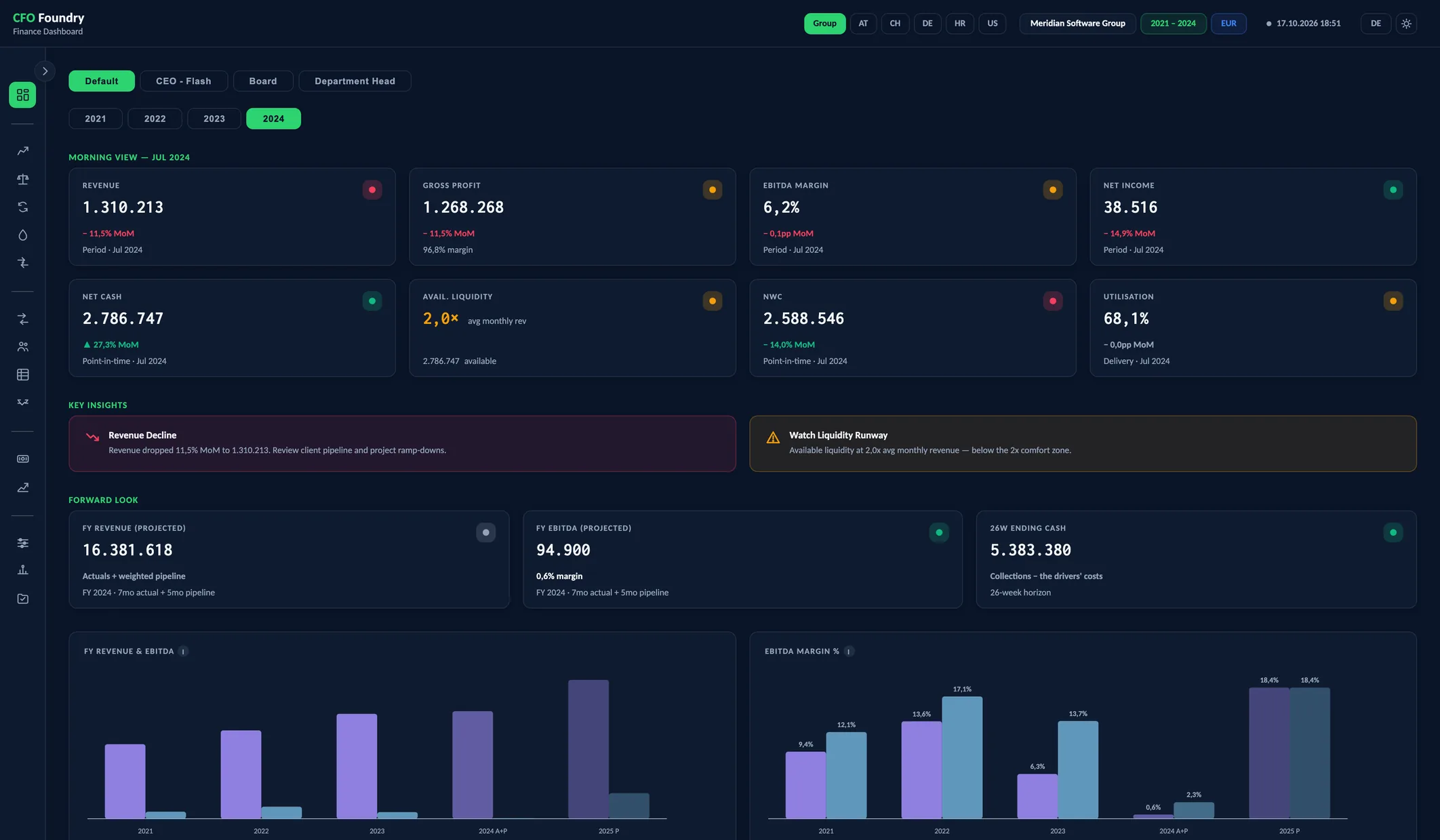
How it continuesInto continuity, once your team takes over the monthly pack.
The monthly pack carries on after the engagement ends.
your team runs the build with the fractional CFO beside it
one or two closesyour team delivers the files, runs the build, reads the pack
monthlyThe fractional CFO answers questions and fixes mapping issues
as needed, by the dayThe fractional CFO reviews the mapping and the data map with your team
once a yearClients during or after an engagement whose team takes over the monthly pack.
Running CFO Foundry for the company's entities, at one list price per company whoever runs it; the price follows the number of entities.
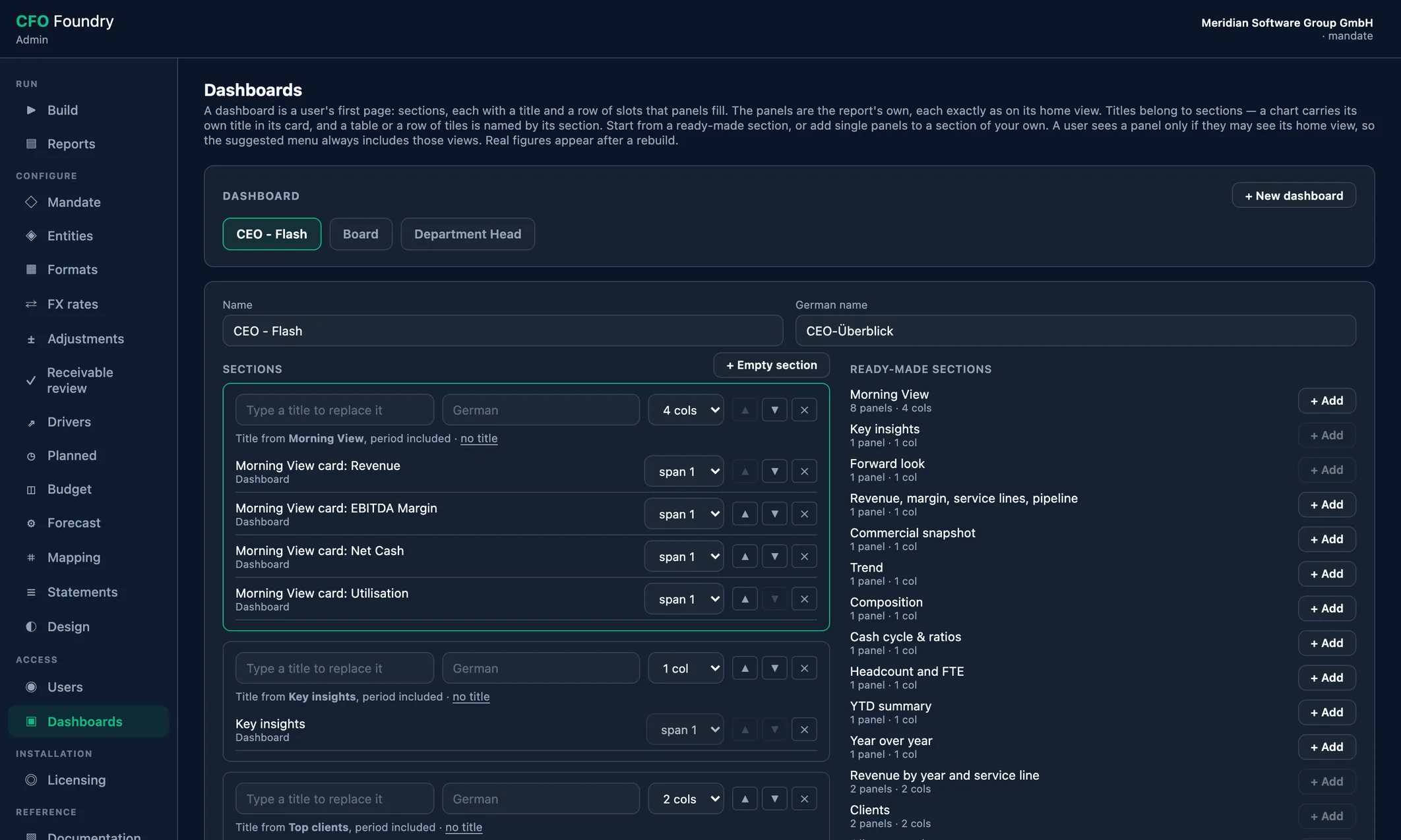
How it continuesFor as long as the company wants. Before a sale, a sprint builds on the same data.
The set-up is a shorter route to the same monthly pack.
what the exports contain, which entities, how much history
1 to 2 weeksevery account to the standard chart, per entity
1 to 3 weeksan intake format per source; who delivers which file, by when
1 to 2 weeksgenerated and reviewed together
1 weekyour team runs the build and reads the pack
1 to 2 sessionsCompanies with their own CFO, or that want CFO Foundry running without one.
How it continuesUnder the annual licence, as in continuity, with the annual review.
The work a buyer will check is done in advance, in a fixed scope.
trial balances, ledgers and history loaded, entities mapped
1 to 2 weeksadjusted EBITDA, every add-back documented
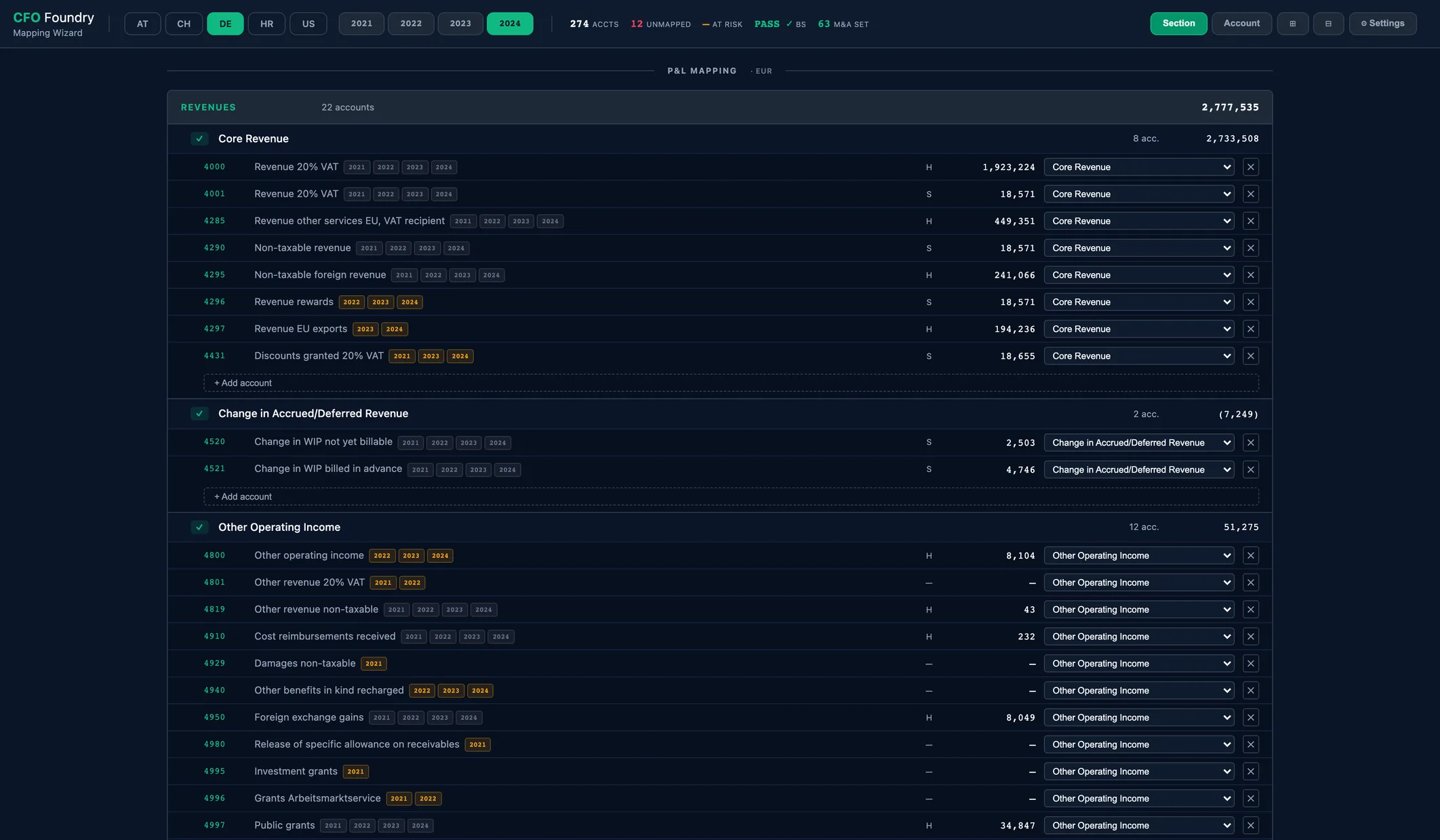
2 to 3 weeksthe normal level from the monthly history
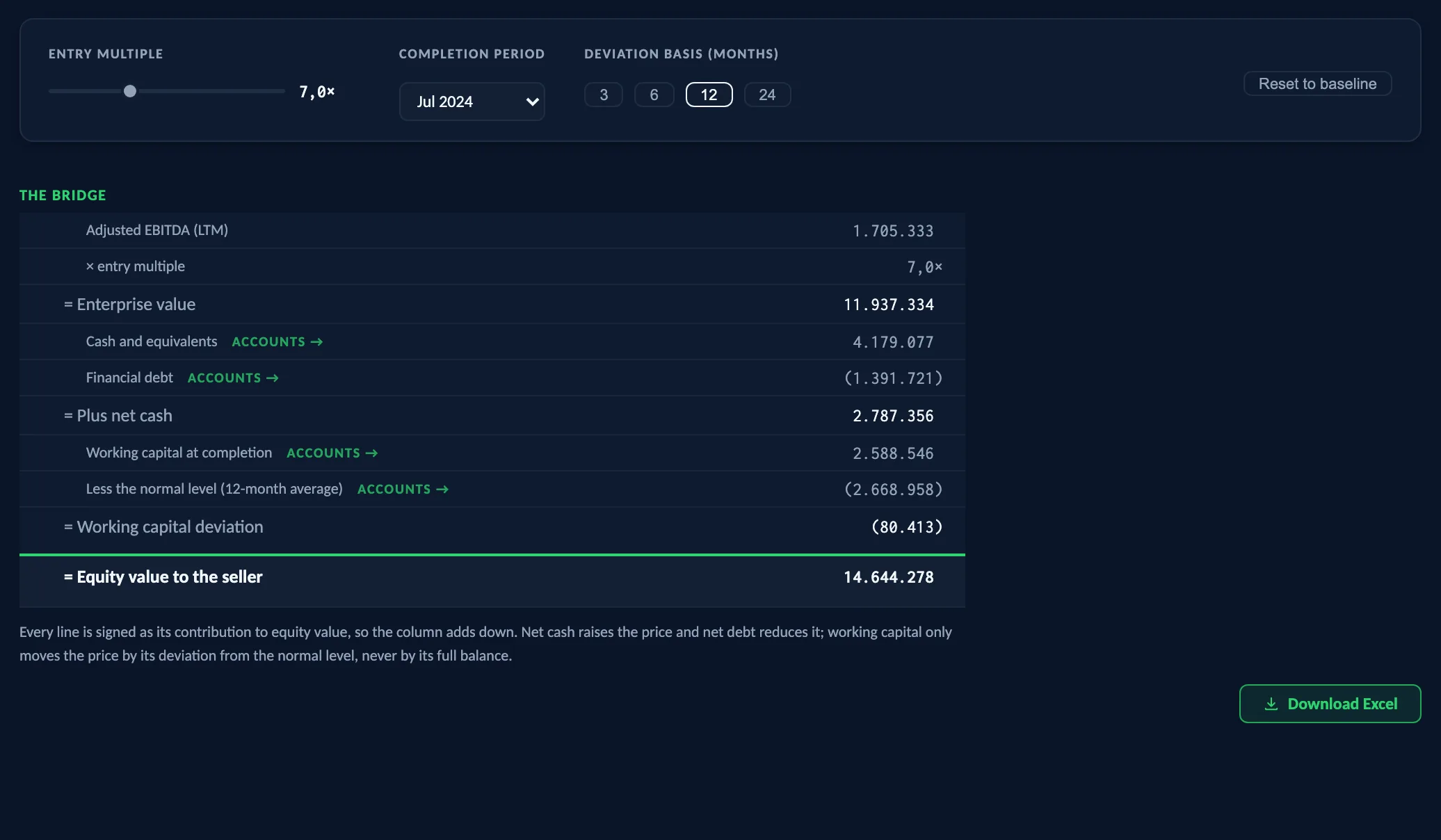
1 weekfrom adjusted EBITDA to equity value, with the buyer's view
1 weekthe checklist complete, every file linked
alongside, 2 to 4 weeksCompanies preparing a sale that do not want a monthly mandate.
How it continuesInto an engagement through the sale, or a licence for the team.
Mostly listening and reading. Entities, countries and currencies. The accounting setup: your internal finance staff and the external Steuerberater, when the close actually lands, whether one month is comparable to the next. What the founder and the leadership team see today, how old it is when it arrives, and how far ahead cash is visible.
And the data map: which sources exist beyond accounting, what shape they are in, who owns them. Trial balances, payroll and HR data, operational hours from time tracking, the sales pipeline, cost centres.
A written assessment with a prioritized plan, and a first CFO Foundry pack generated from your last trial balances. Unpolished by design: it shows what your data can already say and exactly where it falls short.
Chart of accounts and bookings. Clean up what grew by accident, agree booking conventions with the Steuerberater, accruals booked every month. A negotiation as much as a task.
The structures the reports need. Cost centres that match how the business runs, project and client structures where contribution will be measured, HR data in a defined shape, the pipeline export agreed with sales.
The mapping. Every account mapped once into the engine. From here on, every report is generated from the data.
The handover paths. For each data source an owner, a shape, and a date in the month. Written down, agreed with the people who deliver.
The first full monthly pack, reviewed together: every view, from your real systems, on a date that was promised.
Data lands by a fixed day. Close. The pack is generated and distributed. Then one review meeting: what moved, why, and the two or three decisions the numbers ask for. Decisions minuted, revisited next month. The forecast rolls forward, so a miss surfaces while the quarter can still be changed.
Just as important: your people learn the rhythm. Internal staff and the external accountants deliver without being chased, and the team starts reading its own numbers. That takes months of habit, and it is what makes everything durable.
Planning. An 18-month projection on drivers measured in the company's own history, and scenarios before a large decision.
Pricing from delivery cost. What an hour costs, what it sells for, what each project and client contributes.
The cost base. Vendor and software spend, contracts, tooling that fits your size. Bringing AI into financial operations and reporting where it earns its place.
Board and bank reporting from the same figures. No parallel spreadsheets.
The stage runs whether or not a sale is planned. When a sale comes, the work is already under way. One-off and shareholder-related costs are documented as they occur: documented then, they get accepted; reconstructed later, they get challenged. The data room grows as a by-product of the monthly pack.
And when a transaction is live, the numbers get defended: during diligence and after it, through the earnout and true-up mechanics where real money still moves.
Handover is part of every stage, so your team can run the process.
The reports, the Excel exports, the data room. Ordinary files, built from your data, yours for good, including everything ever generated.
Which entities, which accounting systems, what you need to see. After that call, both sides know whether this fits.
Get in Touch