Receivables and payables, by age
Every open invoice from the month-end ledger exports, aged by days overdue, checked against the trial balance and put in order for review.
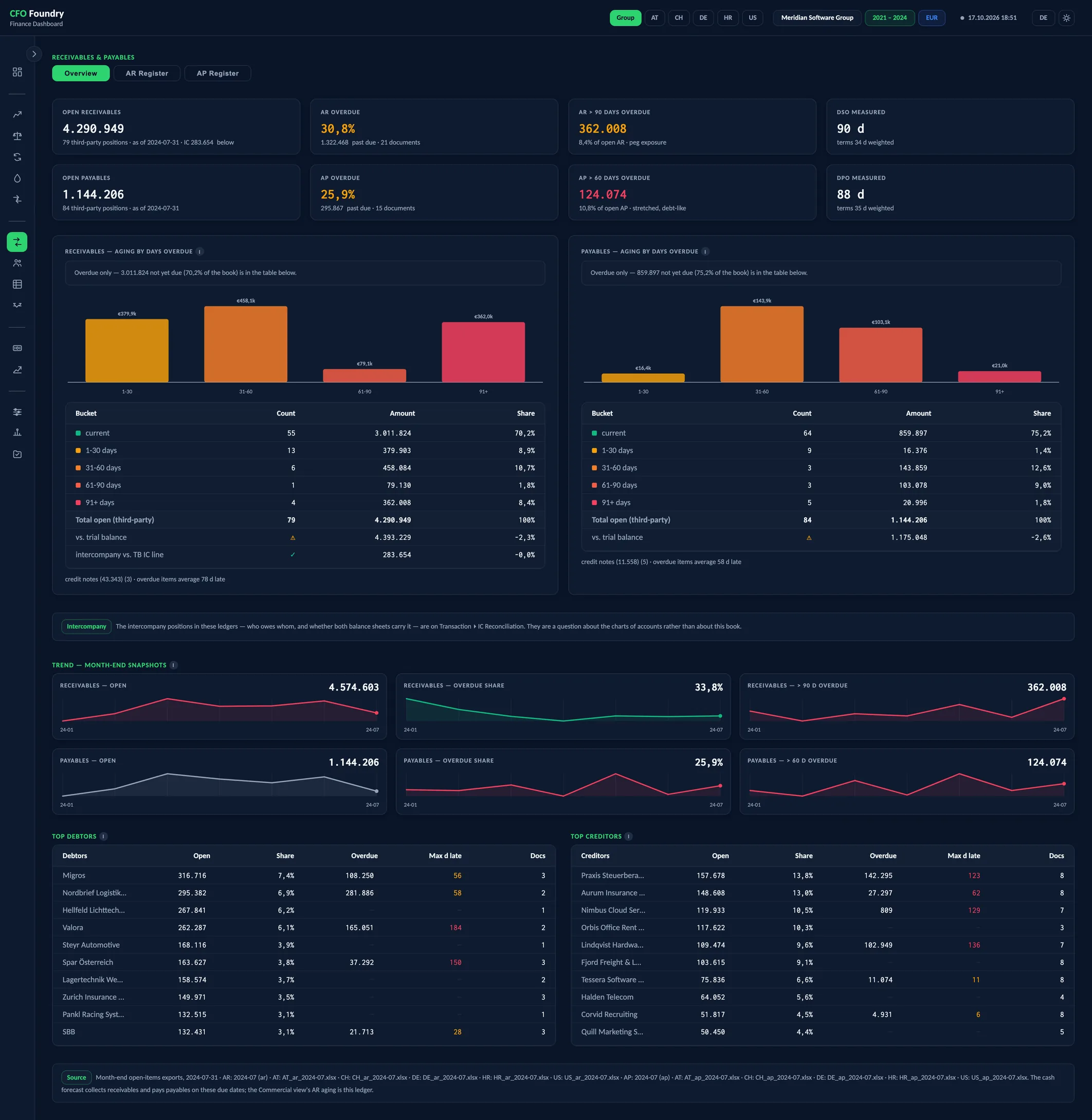
- 14 KPIs
- RECEIVABLES — AGING BY DAYS OVERDUE
- PAYABLES — AGING BY DAYS OVERDUE
- TOP DEBTORS
- TOP CREDITORS
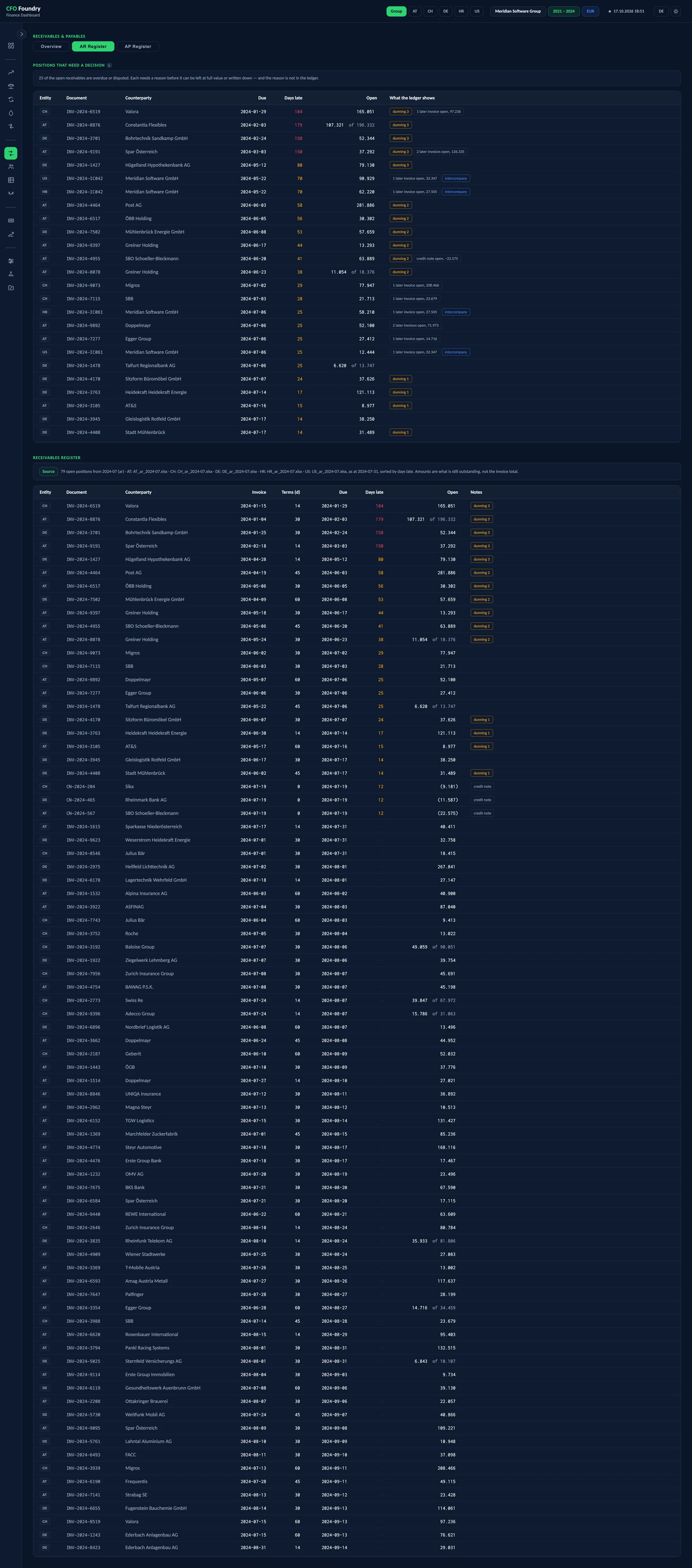
- POSITIONS THAT NEED A DECISION
- RECEIVABLES REGISTER
Meridian is a fictional demo company. All figures are sample data.
Key questions
Who owes how much, and how late?
Open receivables are grouped by days overdue, with the largest debtors listed by name and their share of the open book.
Does the ledger agree with the books?
The total of the open items is compared with the trade receivables and payables of the trial balance for the same month.
Which receivables need a decision?
A worklist names every overdue or disputed receivable with what the ledger shows about it, and records the allowance decided for each.
Receivables and payables, by age
Open receivables and payables from the ledger exports, aged and checked against the trial balance. A worklist puts the overdue items in order. Each review decision on a receivable is recorded beside it: the allowance, the reason, who decided and when.
AR & AP
- Overview
- AR Register
- AP Register
- Open receivables
- AR overdue
- DSO measured
- Open payables
- AP overdue
- DPO measured
- Receivables — open
- Receivables — overdue share
- Payables — open
- Payables — overdue share
- Receivables — aging by days overdue
- Payables — aging by days overdue
- Receivables — aging by days overdue
- Payables — aging by days overdue
- Top debtors
- Top creditors
- Positions that need a decision
- Receivables register
- Payables register
Platform
- Receivable Review: Each review decision kept beside the receivable: allowance, reason, name and date.
From the open items list
The view reads the month-end open items exports of the accounting system, one for receivables and one for payables, and uses whatever further detail the export carries.
With an export for every month-end, the report shows the trend over the months and checks each month against the trial balance. With the exports in the data room, the AR & AP view appears in the report.
Aging, the largest positions and the reconciliation
The Overview tab ages both sides by days overdue: not yet due, up to 30, 31 to 60, 61 to 90 and more than 90 days. Cards show the open totals, the overdue share and DSO and DPO measured on the trial balance, with the weighted payment terms beside DSO. The largest debtors and creditors follow, each with its share of the open book.
The open items total is checked against the trial balance each month, and a difference that matters is flagged. Long-overdue receivables and payables are named with their amount and share, as a buyer's due diligence reads them.
Positions with group companies are shown apart from those with third parties. Whether they match between the entities is checked in the group report's Transaction view.
The receivable review
An overdue or disputed receivable needs an individual assessment before it stays at full value or is written down. The AR Register tab opens on Positions that need a decision: each one with what the ledger shows, such as days overdue, dunning level, part payments, later invoices to the same customer and open credit notes. The reason a payment stalled sits with the account manager, so the list states the facts and leaves the judgement to a person.
In the operator app, each decision is recorded with its allowance, its reason and evidence, who decided and when. The report adds the decision and the resulting allowance to the worklist, with the number decided and the assessed allowance in total.
The decisions stand beside the measured figures. The open amounts, the aging and working capital stay as the ledger and the trial balance show them. Decisions carry over from month to month, and one for an invoice that has since been paid stays on record.
Terms
- Open Items
- Invoices issued or received that are not yet fully paid, one row per document.
- Days Overdue
- The days since the due date. An item not yet due is current.
- Allowance
- The part of a receivable that is not expected to be collected, decided invoice by invoice.
- Dunning Level
- How many reminders a receivable has received.
- DSO and DPO
- How many days of revenue the receivables represent, and how many days of purchases the payables represent.
Data sources
- Month-end open items exports for receivables and payables, per entity
- The monthly trial balance and the account mapping, for the reconciliation and the day counts
- The receivable review decisions recorded in the operator app
FAQ
What is an accounts receivable aging report?
A list of open receivables grouped by how long they are overdue, typically up to 30, 31 to 60, 61 to 90 and more than 90 days. It shows how much is at risk and with whom.
How is an allowance on receivables documented?
Invoice by invoice: the percentage, the reason, the evidence, who decided and when. That record answers how the allowance was arrived at, which is what an auditor or a buyer asks.
Which export is needed?
The open items list of receivables and of payables at each month-end, as the accounting system writes it.
Why do overdue receivables matter in a sale?
A buyer's due diligence reads long-overdue receivables as doubtful and may take them out of working capital, which moves the price. A documented review, invoice by invoice, gives the seller an answer to each one.
Get in touch
Describe your situation in a few lines. A reply typically follows within 1–2 business days.
To the Contact Form